The Strategic Power of Interior Planners for School Home Work
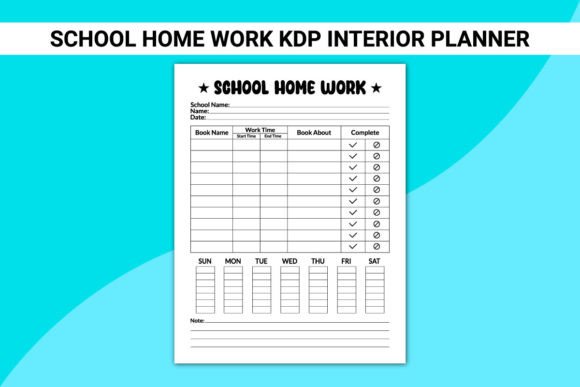
In the bustling world of educational publishing and content creation, efficiency and design are not just afterthoughts; they are central to success. A tool like a School Home Work KDP Interior Planner represents a shift in how creators approach the layout and presentation of educational materials. It moves beyond simple template use to a more strategic, integrated planning process.
The Core Concept: Structure Before Content
At its heart, an interior planner for school homework materials is a blueprint. It is a structured framework designed to organize the flow of information, exercises, instructions, and visual elements within a printable workbook or digital resource. This pre-planning stage is critical, especially for platforms like Amazon KDP (Kindle Direct Publishing), where the final product's interior layout directly impacts usability and customer satisfaction.
The philosophy behind using such a planner is that good design facilitates better learning and engagement. A child confronted with a cluttered, poorly spaced worksheet is less likely to engage meaningfully with the content. Conversely, a clean, logically sequenced, and visually appealing layout can reduce cognitive load, making the educational task feel more manageable and even enjoyable.
Characteristics of a Modern Planner Design
When discussing a high-quality School Home Work KDP Interior Planner Design, several key characteristics come to the forefront. The assertion that a design should be unique, creative, modern, and eye-catching is foundational. Uniqueness ensures that the published work stands out in a crowded marketplace. Creativity in layout—perhaps through unexpected but logical sequencing of activities, inventive use of space for answers, or integrated reward systems—can transform a simple workbook into a more dynamic learning journey.
Modernity refers to an alignment with current educational trends and visual aesthetics. This might mean incorporating space for digital completion instructions, using contemporary fonts and clean line art, or structuring pages for optimal printing on standard home printers. Eye-catching design is not merely about bright colors; it's about strategic visual hierarchy. Important instructions or key activity headers should naturally draw the user's attention through thoughtful placement and typography.
The Practical Advantage of a Large Format
The specification of a large size, such as 8.5×11 inches, is a deliberate and practical choice. This is the standard US letter size, compatible with the vast majority of home printers, binders, and filing systems. For a school homework planner, this size offers ample space. It allows for generous margins, which are not only aesthetically pleasing but also practical for binding and handling. More critically, it provides enough room on each page to present complex multi-step problems, reading passages alongside questions, or creative drawing areas without forcing cramped handwriting.
For the KDP creator, designing within this known framework from the start eliminates formatting surprises during upload. It ensures that the digital design translates perfectly to the physical printed book, maintaining the integrity of spacious layouts and clear visuals that were central to the planner's design goals.
File Formats: Flexibility for Creation and Distribution
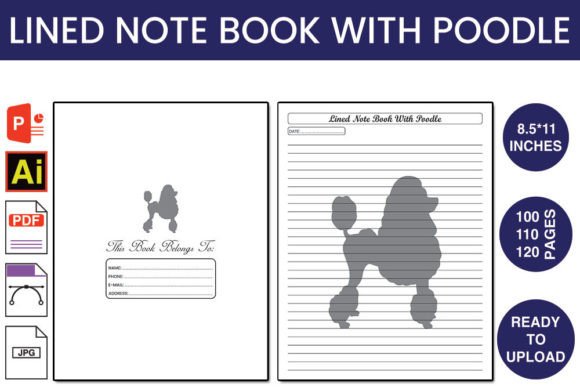
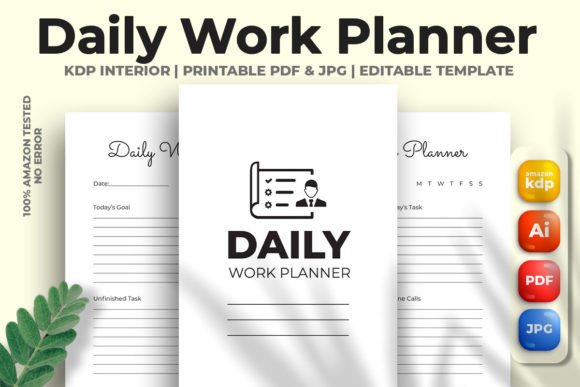
The technical backbone of a versatile interior planner lies in its delivered file formats. Availability in AI (Adobe Illustrator), PDF, JPG, PNG, SVG, and EPS files covers the entire spectrum of creation, editing, and final use.
The AI file is the editable source, a gold standard for professional designers using vector graphics. It allows for infinite customization—changing colors, modifying layouts, adding or removing elements—without loss of quality. The PDF is the universal delivery format, perfect for printing, digital distribution, or direct upload to KDP. It preserves all layout, font, and vector information.
JPG and PNG files offer rasterized versions useful for quick previews, sharing in non-design contexts, or integration into other digital platforms. The SVG and EPS files are crucial for scalability. They are vector formats, meaning the design can be resized to any dimension—for a poster, a web element, or a different print size—without becoming pixelated or blurry. This suite of formats empowers the end-user, whether they are a graphic designer making final tweaks, a teacher printing weekly sheets, or a publisher preparing files for multiple distribution channels.
Real-World Applications and User Scenarios
The utility of a well-crafted School Home Work KDP Interior Planner extends across a diverse user base. Educational content creators, from individual homeschool parents crafting custom curricula to large publishers producing grade-level series, use these planners as a foundational grid. They populate the pre-structured pages with math problems, language arts exercises, science observation logs, or history research prompts.
Teachers and tutors find immense value in such planners for creating supplementary materials. Having a consistent, professional layout framework saves hours of design time, allowing them to focus on content development. They can generate tailored homework packets, summer practice books, or remedial skill builders that look polished and cohesive.
For entrepreneurs in the KDP space, these planners are a product category themselves. They can sell the interior planner templates to other creators, or use them to produce their own branded lines of educational workbooks. The high-quality, multi-format files are a key selling point, offering customers both immediate use and long-term adaptability.
Integration into Professional Workflows
Implementing a planner into a content creation workflow involves several considerations. The starting point is often the assessment of educational objectives. What skills are being practiced? What age group is the target? The planner's structure—the number of exercise blocks per page, the presence of example areas, the inclusion of progress trackers—should be selected to match those objectives.
Next is the content population phase. Using the editable AI or EPS files, creators insert their specific questions, texts, and diagrams. The pre-defined layout ensures consistency: every page maintains uniform margins, header spaces, and answer box sizes, creating a professional rhythm throughout the book.
The final stage is output and testing. Generating the print-ready PDF and perhaps a set of JPGs for digital previews. A crucial step is to physically print a test copy at 8.5×11 inches. This real-world check reveals how the design feels on paper—are the lines for writing sufficiently dark and spaced? Do instructions stand out clearly? This tactile verification, enabled by the planner's standardized size, is indispensable for quality assurance before KDP publication or classroom use.
The Hallmarks of a High-Quality File Document
The term "high-quality file document" encompasses several technical and design attributes. On a technical level, it means files are built correctly. Vector files (AI, SVG, EPS) have clean, minimal anchor points and paths, not overly complex or broken geometries. Raster files (JPG, PNG) are exported at optimal resolutions—high enough for crisp detail but not unnecessarily large for digital sharing. PDFs are properly compressed, with embedded fonts and correct page dimensions.
On a design level, high quality translates to intentionality. Every element on the planner page serves a purpose. Lines are not merely decorative; they guide handwriting. Spaces are not empty; they are reserved for specific user input. The typography is legible and age-appropriate. The color palette, if used, is print-friendly and functional, perhaps using grayscale for cost-effective home printing. This thoughtful construction results in a document that is not just a shell but a functional tool, enhancing the final educational product it helps to create.
In essence, a School Home Work KDP Interior Planner is more than a template. It is a design system applied to educational content. It brings order, visual clarity, and production efficiency to the process of creating learning materials. By prioritizing a unique and modern layout in a standard large format, and by delivering it through a comprehensive set of high-quality editable files, it empowers a wide range of users—from professional publishers to dedicated teachers—to produce homework resources that are as effective in their form as they are in their educational function.