Unlocking Visual Intrigue with Diamond Maze Puzzles
Imagine infusing a project with an instant spark of engagement and intellectual curiosity—that’s the power a meticulously designed Diamond Maze Puzzles Printable Paper collection can bring to your creative toolbox.
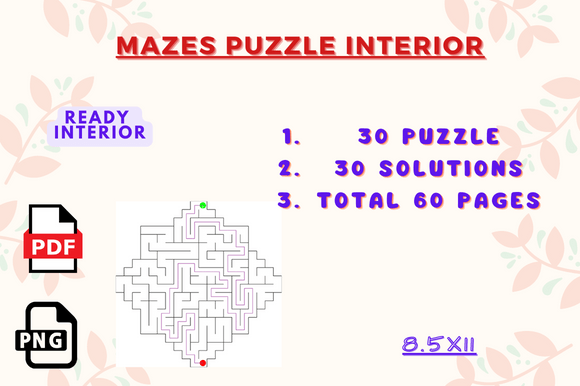
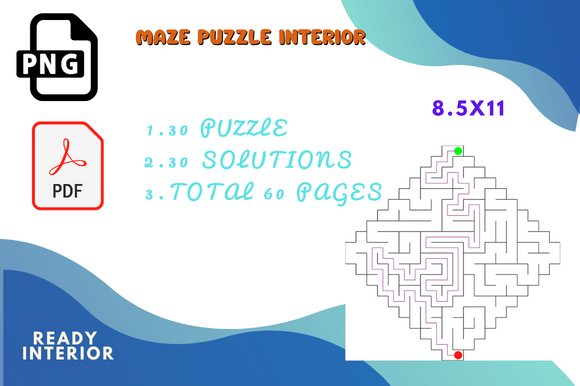
From a professional graphic design perspective, such assets are more than mere puzzles; they are structured visual elements that offer texture, pattern, and interactive depth. A set like the 30 Diamond Shaped Maze with Solutions KDP Interior, ready to upload, represents a complete digital resource built for utility and aesthetic impact. It provides a foundation for designers seeking to integrate unique, geometric complexity into their work.
The Role of Structured Patterns in Visual Communication
In modern visual design, clarity and intrigue must coexist. The diamond shape, with its inherent symmetry and sharp angles, introduces a strong, guiding geometry. When this form is elaborated into a maze, it creates a focal point that balances challenge with beauty. This duality serves multiple design disciplines:
- Branding & Logo Design: Simplified maze motifs can symbolize problem-solving, journey, or discovery, enriching a brand's narrative.
- Marketing Materials: Incorporating these puzzles in brochures or ads can increase dwell time, enhancing user engagement.
- Digital Products & Social Media Graphics: As printable paper or digital layers, they offer unique content for brain teaser books, educational posts, or interactive campaign elements.
- Editorial & Web Design: Used as background textures or section dividers, they establish visual hierarchy and a modern aesthetic.
The key is to view these mazes as versatile creative assets. Their scalability—from full-page illustrations to tiny icons—makes them adaptable across print design, UI design, and packaging design.
Integrating Geometric Assets into Your Design Workflow
Successful integration hinges on thoughtful evaluation. Consider these practical recommendations when utilizing such patterned elements:
Align with Your Color Palette: The monochrome structure of a maze is a blank canvas. Applying your brand’s colors transforms it from a generic graphic into a cohesive part of your visual identity.
Prioritize Readability & Composition: Even the most intricate pattern must serve the communication goal. Ensure it complements, not competes with, key text and imagery. Use it to frame content or create negative space interest.
Maintain Consistency: If using maze elements across a campaign—from a KDP puzzle book interior to related social media graphics—keep the style uniform to strengthen brand recognition.
Furthermore, the inclusion of solutions in a resource like this speaks to a professional presentation, offering completeness for creators publishing game books or educational materials. It adds value for the end-user and simplifies the designer’s process.
Ultimately, whether your project involves advertising campaigns, presentation decks, or merchandise, the thoughtful application of structured visual elements elevates the work. It demonstrates an attention to detail that resonates with audiences, improving not only aesthetics but the overall user experience. Quality creative assets, chosen with an eye for both visual impact and practical usability, become indispensable tools in crafting compelling, effective design.