The Enduring Appeal and Craft of Printable Corridor Maze Puzzles
Within the expansive world of puzzles and printable games, a specific category stands out for its elegant simplicity and profound depth: the corridor maze. Unlike the sprawling, image-filled labyrinths common in children's activity books, corridor mazes distill the challenge to its core elements. They present a clean, structured path-finding puzzle where the solver navigates through a network of intersecting corridors, seeking the route from entrance to exit. This focus on pure logic and spatial reasoning makes them uniquely appealing to a wide range of minds.
Understanding the Double Corridor Maze Structure
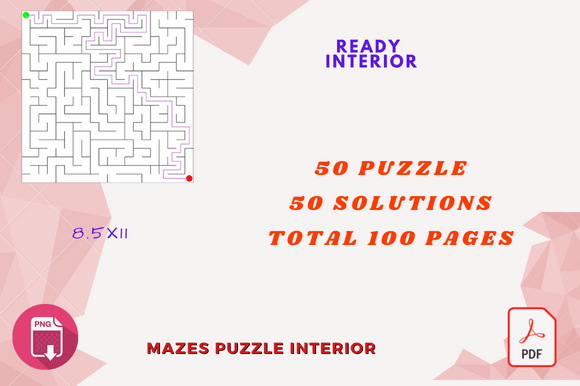
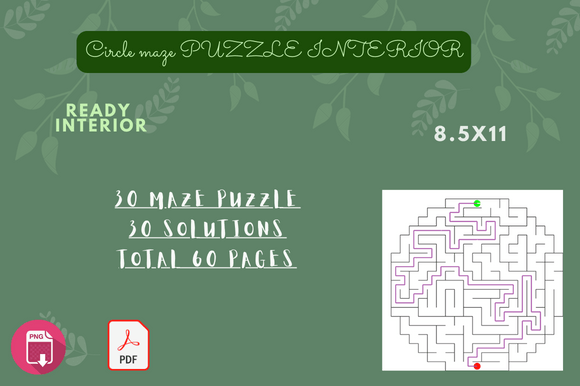
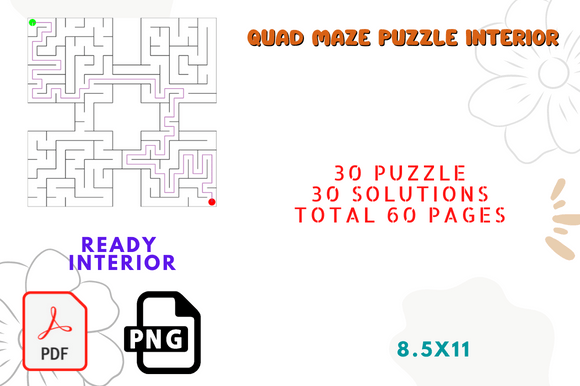
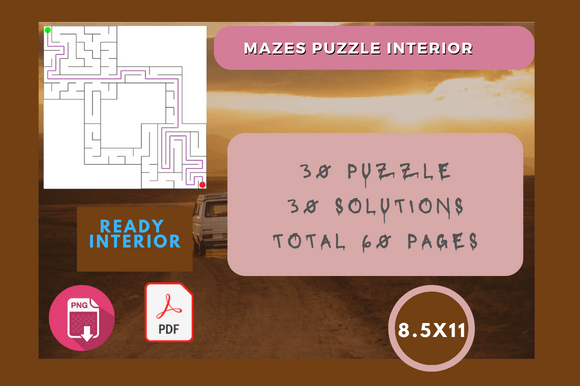
A double corridor maze, as featured in dedicated puzzle interiors, introduces an additional layer of complexity. The design typically presents two distinct, intertwined corridor systems within the same puzzle grid. The solver must not only find a path through one set of passages but often navigate between or across both systems to reach the goal. This creates a puzzle that feels architectural, like navigating the blueprint of a complex building or a circuit diagram. The corridors are clear, defined lines on a page, free of decorative clutter, which places the entire cognitive load on the task of analysis and sequential decision-making.
The characteristics of these mazes are deliberate. The corridors are often of uniform width, creating a sense of order. Dead ends are logical conclusions of a wrong turn rather than artistic embellishments. Intersections are precise, offering clear choice points. This minimalist design is not a reduction in quality but a concentration of challenge. It transforms the puzzle from a casual activity into a focused exercise for the brain, akin to a streamlined logic problem or a spatial algorithm.
Practical Applications Beyond Simple Entertainment
The value of printable corridor maze puzzles extends far beyond passing the time. For educators, these mazes serve as excellent tools for developing executive functions in students. They require planning, working memory (remembering which paths were already tried), and inhibitory control (avoiding impulsive turns). Presented on printable paper, they become a versatile classroom resource, usable for individual quiet work, group challenges, or timed activities. Researchers in cognitive psychology might utilize simplified corridor maze patterns to study basic human navigation and problem-solving strategies under controlled, visually unambiguous conditions.
For professionals in fields like UX design or logistics, working with a clean corridor maze can be a metaphorical exercise. It mirrors the process of flowcharting user journeys or optimizing delivery routes through a network of streets. The puzzle’s constrained environment forces consideration of efficiency and all possible branches. Hobbyists, particularly those interested in puzzle design or game theory, analyze these mazes to understand fundamental principles of path creation and obstruction. The printable format allows for easy annotation, redrawing, and personal modification, turning a solved puzzle into a template for further creation.
The Advantages of a Ready-to-Use Puzzle Interior
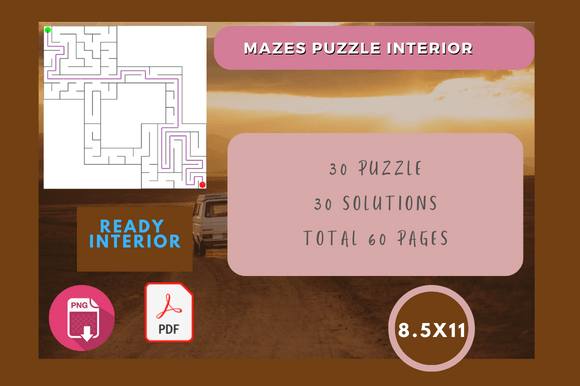
A curated collection, such as a KDP interior featuring 30 double corridor mazes with solutions, offers significant practical advantages. First is the matter of immediate utility. For a consumer, educator, or therapist, having a professionally formatted set of 60 pages—one puzzle per page followed by its solution—eliminates preparation time. The puzzles are uniform in quality and progressively varied in difficulty, providing a structured experience. The 8.5″x11″ PDF format is the standard for easy home printing or professional digital distribution, ensuring compatibility and crisp results on any printer.
From a creator’s or business owner’s perspective, such an interior is a valuable asset. It represents a complete, sellable product that adheres to platform specifications. The “low content” nature—where the core value is the provided puzzles rather than extensive text—meets a specific market demand for reusable, engaging activity books. Having the solutions included adds immense value for the end-user, transforming the product from a mere challenge into a learning tool. They can compare their attempted path with the optimal one, analyzing their mistakes and improving their strategy for subsequent puzzles.
Key Considerations for Design and Use
Creating or selecting effective corridor maze puzzles involves several considerations. The balance between difficulty and solvability is paramount. A maze that is too easily solved offers little satisfaction; one that is impossibly convoluted leads to frustration. Good design often employs a mix of obvious dead ends, longer misleading branches, and a few clever, minimal-path solutions. The visual clarity of the printable paper is crucial: lines must be dark and consistent, and the background must not interfere. For double corridor mazes, color differentiation between the two corridor sets can be helpful, though many effective designs use only black and white, relying on the solver’s discernment.
For the user, the mode of engagement is a choice. Some will approach the puzzle with a pencil, lightly tracing tentative routes. Others prefer a purely visual solution, solving it in their mind before marking the answer. The printable format supports both methods. Furthermore, these puzzles are notably durable. They are not tied to cultural references or language, making them timeless and universally accessible. A well-designed corridor maze puzzle from years ago remains as valid and challenging today.
Observations from consistent use show that these puzzles cultivate a particular kind of patience. Because the visual field is so uncluttered, the solver’s attention is not scattered. They learn to methodically scan the network, developing a technique for systematic exploration. This focused patience is a transferable skill, applicable to reading complex diagrams, debugging code, or following detailed instructions.
The Workflow from Puzzle to Printed Page
The journey of a corridor maze puzzle to a printable sheet involves a deliberate workflow. Design begins with a conceptual layout, often starting with the exit and entrance points and then designing the obstructive network between them. For double corridors, the designer layers two such networks, ensuring they interact in interesting but logical ways. This design phase is a puzzle in itself, requiring the creator to ensure there is exactly one correct solution (or occasionally a defined number of equivalent solutions) amidst many plausible wrong turns.
Once designed digitally, the maze is placed into a page layout. The standard one-maze-per-page format respects the solver’s need for focus and provides ample white space for notes or markings. The accompanying solution page is typically the same maze with the correct path highlighted, often in a contrasting color or a thicker line. This clear visual feedback is essential. Compiling 30 such mazes into a single PDF creates a coherent product. The file’s readiness for upload to platforms like KDP means it meets technical criteria: proper dimensions, embedded fonts if any, and sequential pagination. For the end-user, the workflow is simple: download, print, and engage. The physical act of printing on their chosen paper gives them ownership over the material, allowing for bulk printing for a class or selective printing for personal use.
This process highlights the real-world relevance of such products. They bridge digital design and physical activity. They support independent creators in building a digital inventory. They enable educators to procure resources without waiting for physical shipping. For the hobbyist, a collection of 30 mazes represents a substantial reservoir of challenges, each a unique exploration of spatial logic. The inclusion of solutions transforms the book from a terminal product into a self-teaching system, where each solved puzzle builds skill for the next.
Semantic Variations and Enduring Value
When discussing this niche, natural language encompasses terms like printable maze puzzles, logic path worksheets, and corridor labyrinth games. The specific phrase corridor maze puzzles printable paper points directly to the tangible, usable format—the marriage of the intellectual design with the physical medium. This is its core appeal. It is not a fleeting digital animation but a permanent mark on a page, a record of one’s reasoning process that can be saved, shared, or revisited.
The enduring value lies in this permanence and purity. In a world saturated with multimedia stimuli, the quiet challenge of a black-and-white corridor maze on a sheet of paper demands and rewards a different kind of attention. It proves that deep engagement does not require high complexity in presentation, but can arise from high complexity in structure within a simple presentation. Whether used for cognitive training, leisurely distraction, educational supplementation, or as a model for design principles, the double corridor maze on printable paper remains a remarkably efficient and effective tool for challenging the human mind.