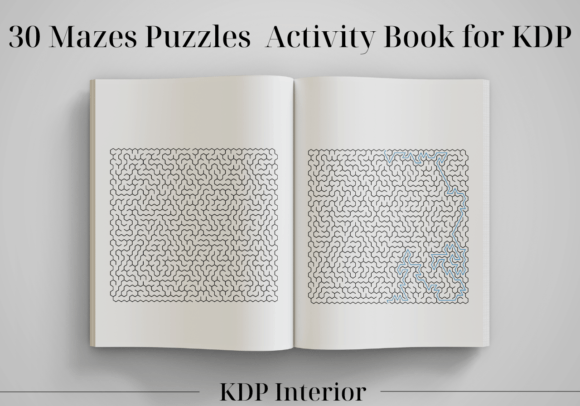
The Engaging World of Mazes: A Versatile Activity Book for Mindful Fun
In the realm of self-publishing, particularly on platforms like Amazon's Kindle Direct Publishing (KDP), creating content that is both enjoyable and beneficial for readers is a key to success. Activity books have carved out a significant niche, offering a tangible, screen-free experience that fosters focus, relaxation, and cognitive development. Among these, maze puzzle books stand out as a timeless and universally appealing genre. This article explores the purpose, creation, and value of a professionally designed maze activity book, such as a "30 Mazes Puzzles Activity Book," and how it fits into modern lifestyles, education, and creative business ventures.
The Fundamental Appeal of Maze Puzzles
Mazes are more than just simple lines on a page. They are a form of puzzle that dates back centuries, found in ancient cultures and garden designs. Their core activity—finding a path from a start point to a finish—taps into basic human problem-solving instincts. At their heart, mazes represent a journey, a challenge with a clear goal but an uncertain route. This metaphorical aspect is part of their enduring charm.
Solving a maze requires and develops several cognitive skills. It demands visual tracking, as the eye must follow potential paths. It engages spatial reasoning and logic, as one must anticipate dead ends and choose alternative routes. It also cultivates patience and perseverance, as the solution often isn't immediate. For children, these activities are foundational for developing fine motor skills (when drawing the path) and pre-math logical thinking. For adults, they serve as a light cognitive exercise, a form of mindfulness that pulls attention away from daily stressors and into a focused, achievable task.
A Closer Look at the Activity Book Specification
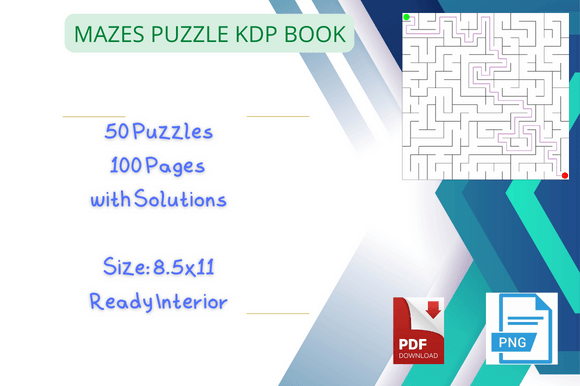
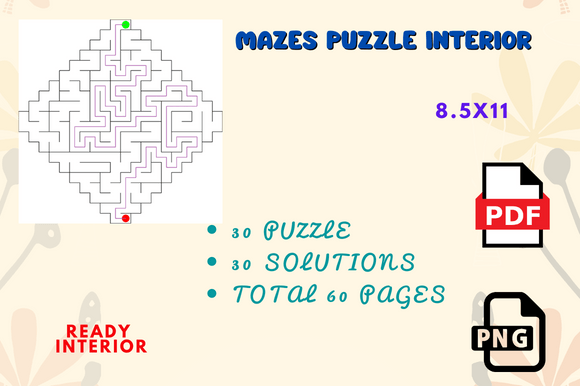
A ready-to-upload interior file for a maze book, such as one featuring 30 unique triangle and square-shaped mazes, is designed with both the end-user and the publishing platform in mind. Key specifications like 8.5″ x 11″ Inches (the standard US Letter size) and 60 Pages ensure compatibility with Amazon KDP's printing services and customer expectations for a substantial activity book. The decision for No Bleed is practical for this type of content, as mazes are contained artworks that do not require background color to extend to the edge of the page.
Crucially, the 300 PPI (Pixels Per Inch) quality guarantee ensures that every line is sharp and clear when printed, providing a professional finish. The structure of 1 Puzzle Per Page allows each maze to be the centerpiece, giving the solver ample space and reducing visual clutter. This design choice respects the activity's need for focus. Furthermore, including the solutions at the end of the book is a thoughtful addition. It provides a sense of closure and accomplishment, assists learners who might get stuck, and removes any potential frustration that could detract from the enjoyable experience.
Purpose and Significance in Modern Contexts
In our digitally saturated world, physical activity books offer a valuable counterbalance. They provide a tactile, analog experience that is increasingly appreciated. A maze puzzle book serves multiple purposes across different demographics.
In Education and Child Development
For parents and educators, such a book is a readily available educational tool. It can be used to supplement learning in several ways. Mazes can be themed (though even abstract shapes like triangles and squares stimulate the mind) to align with other lessons. They are excellent for quiet time activities, improving a child's ability to concentrate independently. In classroom settings, they can be used as rewarding breaks or to develop pre-writing skills. The logical progression from start to finish also subtly teaches goal-oriented thinking.
For Relaxation and Mindfulness
The adult and teen audience often seeks activities that quiet the mind. Unlike digital games which can be overstimulating, solving a maze on paper is a single-task activity. It requires presence and focus on the moment—the very definition of a mindful practice. It’s a form of active relaxation, similar to the appeal of coloring books for adults. The satisfaction of penciling in the correct path provides a small, concrete victory, boosting mood and reducing anxiety.
In Creative Business and KDP Publishing
For the entrepreneur or creative looking to publish on Amazon KDP, a well-designed maze interior represents a practical product. The KDP marketplace thrives on niche, useful content. Activity books have consistent demand. A book with 30 unique, high-quality mazes is a complete product that meets a specific customer need. Its "ready-to-upload" nature signifies that the technical hurdles of design, formatting, and quality assurance have been professionally handled. This allows the publisher to focus on marketing, branding, and building their storefront, perhaps offering more designs as mentioned. It exemplifies how creative work can be packaged into a viable, affordable digital product for a global marketplace.
Clarifying Common Assumptions
Some might assume maze activity books are only for young children. This is a common misunderstanding. The complexity and design of the mazes dictate the audience. A book with intricate, geometrically shaped mazes (like triangles and squares) can appeal to older children, teens, and adults who enjoy a more abstract or pattern-based challenge. The activity is ageless.
Another assumption is that creating such a book is merely about drawing lines. In reality, professional creation involves understanding puzzle difficulty progression, ensuring visual balance and clarity, and adhering to strict technical specifications for print (like 300 PPI and correct dimensions). It is a blend of graphic design, cognitive psychology, and digital publishing knowledge.
Building a Broader Understanding: The Activity Book Ecosystem
Viewing a single maze puzzle book as part of a larger ecosystem enhances its value. For the consumer, it might be one of several types of activity books (coloring, sudoku, word searches) they use for varied mental stimulation. For the KDP publisher, it represents one product line that can be expanded. By visiting the publisher's store, a customer might find more free or super affordable designs, creating a loyal audience for brain-training content.
This ecosystem also connects to broader trends: the growing market for self-care tools, the resurgence of analog hobbies, and the empowerment of independent creators through platforms like KDP. The maze book is a microcosm of these larger movements. It is a tool for individual well-being and a testament to how technology (digital publishing platforms) can distribute traditional, hands-on creativity.
Practical Examples and Use Cases
- Travel Companion: A perfect, non-electronic activity for long journeys, keeping minds engaged without screens.
- Therapeutic Tool: Used by occupational therapists or counselors to build focus and fine motor skills in clients.
- Educational Resource: A teacher photocopies a single maze page as a classroom activity or quiet-time challenge.
- Creative Business Product: An entrepreneur bundles the maze PDF with a themed coloring book as a discounted duo on their KDP store.
- Family Activity: Parents and children solving different mazes side-by-side, sharing a quiet, collaborative hobby.
Conclusion: A Path to Engagement and Satisfaction
A "30 Mazes Puzzles Activity Book," ready for Amazon KDP, is more than just a collection of puzzles. It is a thoughtfully crafted product that serves psychological needs, educational purposes, and business opportunities. From its technical specifications ensuring print perfection to its inherent design that promotes cognitive engagement, it exemplifies how simple concepts can be executed with quality to meet modern demands. Whether for a child developing foundational skills, an adult seeking a mindful break, or a publisher building a creative portfolio, these maze puzzles offer a clear path to engagement, challenge, and the simple satisfaction of finding a way through. As both a tool for personal development and a viable digital product, it highlights the beautiful intersection of traditional play, contemporary needs, and the empowering world of self-publishing.