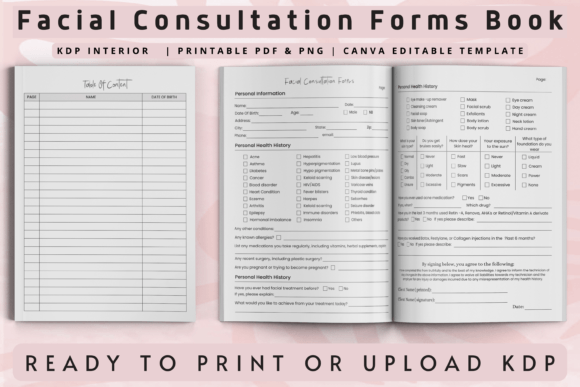
Mastering Client Intake with a Professional Facial Consultation Forms Book
For skincare professionals, aestheticians, and spa owners, the initial client consultation is the cornerstone of a successful service. It sets the tone for trust, gathers critical information, and lays the precise roadmap for treatment. Yet, this vital process is often managed with ad-hoc notes, scattered digital files, or inconsistent paper forms that fail to capture the full picture. A specialized Facial Consultation Forms Book transforms this chaotic first touchpoint into a structured, efficient, and legally sound workflow. This tool is not merely a collection of pages; it is an integrated system for client management, designed to operate seamlessly before, during, and after every facial appointment.
The Role of the Consultation Form in the Aesthetic Workflow
Think of your service workflow as a cycle: initial contact, consultation, treatment execution, post-care advice, and follow-up. The Facial Consultation Forms Book sits at the very heart of this cycle, primarily governing the consultation phase but influencing every subsequent stage. Its use begins before the client even arrives. Preparing a dedicated page prompts you to review any preliminary communications and set a professional agenda for the session. This pre-consultation preparation ensures you enter the meeting focused and organized, rather than scrambling for information.
During the consultation itself, the book serves as your guided script. A well-designed form will systematically walk you through all necessary domains: medical history, skin analysis, current product use, lifestyle factors, and client goals. This structured inquiry prevents you from missing crucial contraindications—like allergies or medications that affect treatment—while also thoroughly documenting the client’s desires. The physical act of writing together, or you noting details as the client speaks, builds engagement and demonstrates meticulous care. It turns a conversation into a collaborative assessment.
Integration with Other Business Tools and Legal Frameworks
A professional practice operates on multiple layers—client management, service delivery, legal compliance, and business marketing. The Facial Consultation Forms Book interacts directly with each of these layers. It is the primary source document that feeds information into your digital calendar or client management software. Clear notes on skin conditions and goals become the reference for designing personalized treatment plans, which can be elaborated in separate service records or treatment logs.
Most critically, it integrates with the legal and ethical framework of your practice. This is where the companion Facial Intake Consent Forms Book becomes essential. The consultation form collects the data; the consent form provides the legal authorization. Using these tools together creates a robust intake packet. The consultation book helps you identify risks and customizations, which then inform the specific disclosures and consent clauses you need in the intake consent form. This tandem use ensures compliance, protects both practitioner and client, and establishes a standard of professionalism that clients recognize and value.
Practical Implementation and Setup Tips
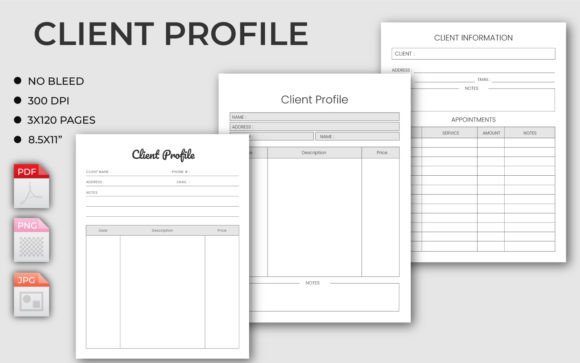
Integrating a Facial Consultation Forms Book into your existing routine requires minimal disruption if approached methodically. First, select a book with a logical page layout that mirrors your natural consultation sequence. Common sections include Client Personal Information, Health History Questionnaire, Skin Analysis Chart (for noting oiliness, dryness, sensitivity, etc.), Current Routine Documentation, and Client Goal Declaration.
Assign a dedicated location for the book—always at your consultation station. Make filling it out a non-negotiable first step for every new client and for significant follow-ups with existing clients. For efficiency, consider pre-populating certain static details for repeat clients from their previous pages, allowing you to focus only on updates and progress. This not only saves time but creates a continuous, longitudinal record of the client’s skin journey, which is invaluable for tracking treatment efficacy and building long-term loyalty.
- Standardize Your Process: Use the same form for every consultation to ensure consistency in data collection and quality control.
- Link to Treatment Notes: Reference the consultation book’s page number on your treatment record for easy cross-referencing.
- Train Your Team: If you have staff, ensure everyone uses the book uniformly to maintain organizational coherence.
- Schedule Review Time: Block brief periods weekly to file completed forms or transfer key data to digital systems, preventing backlog.
Enhancing Usability, Organization, and Long-Term Value
The tangible nature of a book, versus loose sheets, offers distinct advantages in usability and organization. A bound book prevents pages from being lost or misfiled. Sequential page numbers create a natural filing system, making it easy to track the volume of consultations and locate a specific client’s history. Over time, this becomes a centralized, physical archive of your practice’s client interactions.
For long-term use, the consistency afforded by a pre-designed template is its greatest asset. Every client record contains the same categories of information, allowing you to compare cases, identify common concerns among your clientele, and even gather anonymized data for refining your service offerings. This consistency also translates to efficiency; you become faster at consultations as you internalize the form’s flow, and clients appreciate the predictable, thorough approach.
Workflow Example: From Consultation to Follow-Up
Consider a practical scenario. A new client, Anna, books a facial for acne concerns. Before her appointment, you open a fresh page in your Facial Consultation Forms Book. During the session, you methodically complete each section. The Health History reveals she is on a new prescription medication. The Skin Analysis chart helps you visually map the acne type and location. The Goals section clarifies she prioritizes reducing inflammation over immediate extraction.
Based on this documented information, you tailor your treatment, avoiding certain ingredients due to the medication. You also note these contraindications on her Facial Intake Consent Form for legal acknowledgment. After the treatment, you use the goals from the consultation book to craft personalized post-care instructions. For Anna’s next visit, you quickly review her previous consultation page, assess progress against the initial analysis, and update the chart. This creates a closed-loop process where every action is informed by a documented, accessible record.
Outcomes: Building a Professional, Efficient Practice
The ultimate outcome of integrating a dedicated consultation book is a elevation of your practice’s overall operation. It directly impacts efficiency by reducing time spent on redundant questioning and information hunting. It enhances quality control by ensuring every client receives a similarly thorough assessment. It improves client satisfaction through evident professionalism and personalized attention. Furthermore, it mitigates risk by creating a reliable paper trail of client health data and stated goals.
For the solo entrepreneur or the small business owner, this tool embodies process-oriented thinking. It takes a critical but often undervalued task—the intake—and optimizes it for clarity, safety, and results. The Facial Consultation Forms Book, especially when paired with its consent counterpart, is more than an administrative asset; it is a foundational component for building a reputable, scalable, and client-focused aesthetic business. By embedding this systematic approach into your workflow, you free up mental space to focus on the artistry of your treatment, confident that the foundational logistics are handled with precision.