Beyond Ingredients: The Weekly Meal Planner and Grocery List as a Modern Productivity Tool
In a landscape saturated with digital productivity apps and complex project management software, a surprisingly impactful tool has emerged from a decidedly analog domain: the kitchen. The Weekly Meal Planner and Grocery List is no longer just a simple chart for jotting down dinners. It has evolved into a structured system for managing time, resources, and well-being, resonating deeply with professionals, creators, and entrepreneurs seeking control in a fragmented world. Its relevance speaks to a broader convergence of lifestyle management and professional efficiency, where personal habits are recognized as foundational to creative output and business success.
The Anatomy of a Modern Planning System
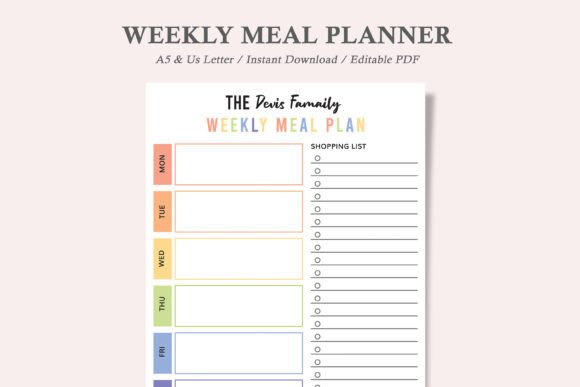
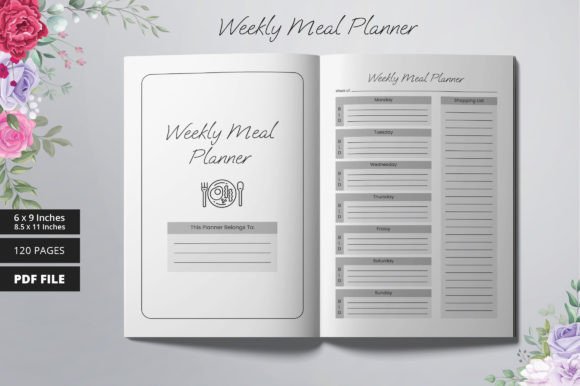
At its core, a contemporary Weekly Meal Planner and Grocery List functions as a dedicated operational document. It systematizes the often chaotic process of food preparation—from conceptualizing meals for the week, to cataloging required ingredients, to executing a focused shopping trip. This simple bifurcation of planning and procurement creates a clear workflow, reducing cognitive load and decision fatigue. For the busy professional, this translates reclaimed hours and mental space. But the modern iteration, especially those designed for publication like the specified package—with its high-resolution files, multiple dimensions (6x9 & 8.5x11), and KDP-ready PDFs—is crafted for permanence and reuse. It is a tangible artifact in a digital age.
Aligning with Macro Trends: Wellness, Sustainability, and Intentionality
The resurgence of structured meal planning is not an isolated phenomenon. It aligns seamlessly with several dominant trends. First, the holistic wellness movement has shifted focus from reactive healthcare to proactive lifestyle design. A Weekly Meal Planner and Grocery List is a practical instrument for this, enabling intentional nutrition, budget control, and the reduction of wasteful last-minute food choices. Second, it supports growing consumer preferences for sustainability. A precise list minimizes over-purchasing and food waste, while planning allows for the integration of seasonal or locally-sourced items. Finally, it caters to the broader cultural shift towards intentionality and mindfulness in daily routines. For the freelancer or entrepreneur, whose work and personal life are deeply intertwined, establishing such a routine provides a pillar of stability.
Why Professionals Are Paying Attention
The audience for tools like this extends far beyond traditional homemakers. Marketers, creators, and freelancers are drawn to the Weekly Meal Planner and Grocery List because it addresses a universal challenge: resource allocation. Time, money, and attention are the primary currencies for any professional. This tool helps budget all three. By consolidating meal-related decisions into a single weekly session, it prevents the daily drain of "what to eat?" It controls grocery expenditure by adhering to a pre-defined list, avoiding impulse buys. Most importantly, it protects attention—a critical asset for creative work—by automating a necessary but potentially distracting life domain.
Consider a content creator facing a deadline. Without a plan, the question of lunch becomes a disruptive, time-consuming interruption. With a planner, the meal is already decided, ingredients are available, and the workflow remains intact. This seamless integration of personal logistics into a productive lifestyle is the key attraction. The availability of professionally designed, print-ready versions, such as the 120-page, 300 DPI CMYK files noted, underscores this professional appeal. It's a ready-to-deploy system, eliminating the need for personal design time, which is itself a form of productivity gain.
Changing Workflows and the Need for Tangible Systems
The digital revolution promised paperless efficiency, yet a counter-trend of returning to tactile tools is evident. Notebooks, planners, and printed lists offer unimpeded focus, free from notifications and multitasking temptations. A Weekly Meal Planner and Grocery List fits this need. It provides a dedicated, uncluttered space for a specific function. For individuals whose daily workflow is already dominated by screens, this physical counterpart can be a relief. It represents a single-task interface, promoting deeper engagement with the planning activity itself, which often yields better, more thoughtful outcomes than a hurried digital entry.
Furthermore, the expectation for tools today is that they be complete, aesthetic, and immediately usable. The detailed specifications—high-resolution, bleed-free, KDP-tested files—meet these expectations. They signal a product that is not a template but a finished solution, ready for integration into one's personal ecosystem or even for commercial distribution on platforms like Amazon KDP. This bridges the gap between a personal tool and a professional asset for entrepreneurs in the self-publishing and lifestyle design markets.
Practical Applications and Broader Implications
The utility of a Weekly Meal Planner and Grocery List manifests in concrete examples. A remote worker can use it to strictly demarcate "work time" and "life admin time," planning meals on Sunday to ensure uninterrupted workdays. A startup founder can use it to ensure healthy eating during intense launch periods, literally fueling performance. A family with dual-career parents can use it as a collaborative document, assigning tasks and streamlining household operations. In each case, the tool reduces friction in a non-work area, thereby freeing capacity for professional pursuits.
This connects to larger developments in productivity theory, where optimization is increasingly viewed holistically. Peak performance is understood to depend on foundational layers like nutrition, sleep, and stress management. The Weekly Meal Planner and Grocery List directly addresses the nutrition layer with operational precision. It is, in effect, a project plan for one's well-being. Its structured format—with sections for days of the week, meal categories, and itemized lists—mirrors the structure used in business for tracking tasks and resources. This familiarity makes it intuitively accessible to a professional audience.
From Personal Use to Creative Business Opportunity
The relevance of this tool also extends into the creative economy. The provided specifications highlight its potential as a digital product. For the entrepreneur or marketer, a well-designed Weekly Meal Planner and Grocery List package represents a viable product for the thriving self-publishing and printable marketplace on platforms like Amazon Kindle Direct Publishing. It serves a clear consumer need while also embodying trends in aesthetic lifestyle products. This dual nature—as a personal productivity instrument and a commercial creative asset—is a significant part of its contemporary story. It exemplifies how a simple concept can be refined and packaged to meet modern standards of quality and usability, turning a habit into a tangible offering.
The Forward-Looking Value of Structured Planning
As the pace of life and work continues to accelerate, the value of systems that impose order on necessity will only grow. The Weekly Meal Planner and Grocery List is a prime example of such a system. Its forward-looking utility lies in its adaptability. It can be as simple or detailed as the user requires, accommodating dietary restrictions, budget cycles, or family preferences. It fosters a proactive mindset, replacing reactivity with intention—a principle that applies far beyond the kitchen. For the professional seeking to master their time and energy, adopting structured planning in personal domains is a logical step. This tool provides a specific, accessible entry point into that disciplined approach.
Ultimately, the attention given to the Weekly Meal Planner and Grocery List reflects a deeper understanding: efficiency is not merely a professional tactic, but a life skill. By providing a clear, repeatable method for managing a fundamental life area, this tool helps bridge the gap between personal well-being and professional achievement. It is a small, focused solution that contributes to a larger goal of integrated, sustainable productivity. Whether used as a personal blueprint or disseminated as a professional product, its structured pages offer more than a list of meals; they offer a framework for a more controlled and intentional way of living and working.