A Practical Guide to Integrating Assorted Word Search Puzzles into Your KDP Publishing Workflow
For creators operating in the Amazon Kindle Direct Publishing ecosystem, efficiency and content quality are paramount. Every component of a publication, from the cover design to the interior layout, needs to be carefully considered and executed. The inclusion of a KDP Interior Assorted Word Search Puzzle book represents a strategic product decision, but its implementation is a process that intersects with planning, asset management, and final output. This isn't merely about adding puzzles; it's about seamlessly integrating a ready-to-use digital asset into a broader publishing pipeline.
Understanding the KDP Assorted Word Search Puzzle Interior
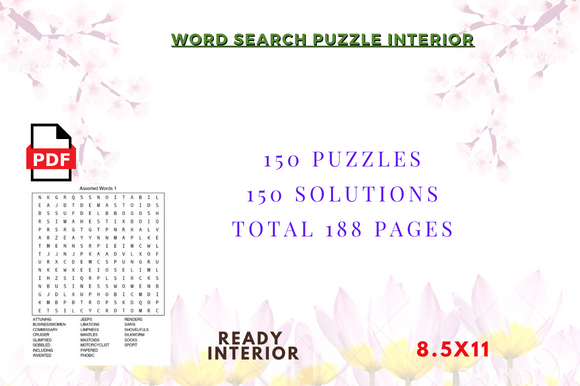
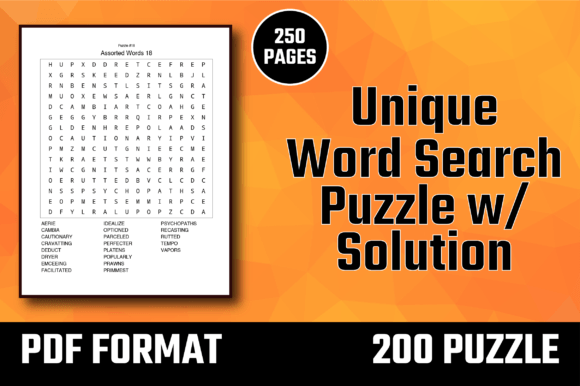
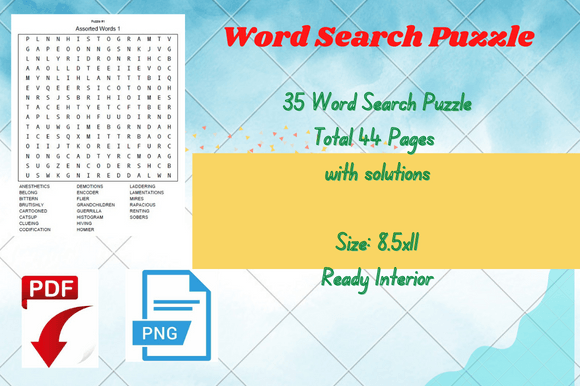
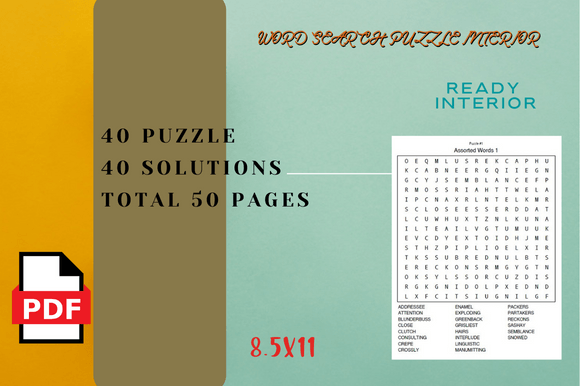
At its core, the INTERIOR KDP Assorted Word Search Puzzle is a pre-formatted, professional PDF document. It contains 40 unique puzzles alongside their solutions, laid out in a clean, one-puzzle-per-page design across 50 pages in the standard 8.5″x11″ trim size. This asset is “ready to upload,” meaning the creator’s primary task is integration, not creation. Its value lies in its status as a finished, quality-controlled component. For the publisher, it shifts the workflow from content generation to content assembly, a significant efficiency gain.
This product fits into the workflow after the initial market research and product concept phase, but before the final compilation and upload to KDP. It is a specific, tangible asset that must be accounted for in the project plan. Its use is not isolated; it interacts directly with decisions about book length, pricing strategy, and target audience expectations.
Pre-Integration Planning and Compatibility Assessment
Before incorporating this interior into a project, a practical assessment is necessary. First, compatibility with your overall book concept is key. Are you creating a dedicated puzzle book, or are these puzzles part of a larger activity compilation? The 40-puzzle, 50-page structure defines the core length of your final PDF. You must decide if this will constitute the entire interior or be combined with other materials.
Second, consider usability from your future reader’s perspective. The assorted nature of the puzzles suggests a variety of themes and difficulty levels, which is a strength for broad appeal. In your workflow, this means you can rely on the asset's built-in variety, eliminating the need for you to categorize or sequence the puzzles manually. Your planning phase should simply note this feature as a benefit to highlight in the book’s description.
Organization at this stage is straightforward. The provided PDF is a single file. Your task is to determine its place in your digital asset folder. Will it be the master interior file, or will it be merged with others? This decision dictates the next steps in your technical process.
Technical Integration and File Management
The practical implementation begins with file handling. Since the interior is a finished PDF, you are not editing the puzzles themselves. Your workflow involves either:
- Using the PDF as the complete interior and proceeding directly to cover design and KDP setup.
- Merging this PDF with other PDFs (like additional puzzle pages, instructions, or title pages) using reliable PDF editing or merging software.
This is a critical juncture. Merging files requires attention to page order and consistency. Ensure the flow from any front matter to the puzzles feels natural. The included solutions pages are already part of the document, so no further assembly is needed for that component. This integrated solutions section is a major workflow advantage, removing the need to create, format, and align answer keys separately.
Quality control at this stage is visual. Open the merged or final PDF and scroll through every page. Check for any unintended formatting shifts, especially if you performed a merge. Confirm that all 50 pages are present and that the one-puzzle-per-page layout remains intact. This visual audit is a simple but essential step in your publishing process.
Strategic Use in the Broader KDP Publishing Process
How does this asset interact with other tools and decisions? It sits between your conceptual tools (market research, audience analysis) and your publishing tools (the KDP dashboard, cover design software).
For instance, when formulating your book’s description on the KDP platform, you can confidently specify “40 Assorted Word Search Puzzles with Solutions” because the asset guarantees this count. This concrete detail enhances your listing’s accuracy and trustworthiness. When setting the price, the professional interior contributes to the perceived value, allowing you to price competitively without undervaluing the work.
For the audience of professionals, educators, and hobbyists, this product simplifies a complex task. An educator creating a resource for students, or a small business owner offering a branded activity book, can bypass the hours required to design, word-list generation, and layout. Their workflow shifts to branding and distribution, not puzzle design.
Long-Term Workflow Integration and Asset Reuse
A key consideration for productivity-minded users is the potential for long-term use and efficiency. This KDP interior is not a one-time asset. Once integrated into your workflow, you understand its structure and requirements. If you publish multiple puzzle books, this same asset type—or similar ones—can be used repeatedly. This establishes a template-like process: market research -> select appropriate pre-made interior -> cover design -> merge (if needed) -> quality check -> upload.
This repeatability breeds consistency and saves time on subsequent projects. You become adept at the technical steps of PDF handling and KDP upload specific to this product type, turning a single project into a replicable system.
Practical Observations for Smooth Implementation
Based on the asset’s specifications, several practical tips emerge:
- Preparation: Always download and open the interior PDF immediately upon purchase. Verify it meets your expectations before proceeding with cover design or other paid services.
- Efficiency Tip: If using it as a standalone interior, your entire production timeline can be condensed. The layout, pagination, and solution formatting are already complete.
- Workflow Example: A blogger creating a promotional item for their audience might follow this sequence: 1) Decide on puzzle book as giveaway, 2) Purchase the KDP Assorted Word Search Puzzle interior, 3) Create a simple branded cover using a template, 4) Upload both files to KDP, 5) Use KDP’s tools to order author copies for physical giveaway. The puzzle interior is the pivotal, ready-made component that makes this quick project viable.
- Output Consistency: Because the interior is professionally formatted, the final printed or digital book will have a consistent, readable look. This removes variability and potential quality issues from amateur layout attempts, ensuring a professional outcome.
Conclusion: A Focused Component in a Larger System
Ultimately, the INTERIOR KDP Assorted Word Search Puzzle is a focused, high-quality component. Its role in your workflow is that of a reliable, pre-assembled module. By understanding its specifications and how it interacts with the other steps in the KDP publishing process—from planning and file management to listing and pricing—you can integrate it smoothly and efficiently. For creators, entrepreneurs, and publishers, its value is measured not just in the puzzles it contains, but in the time, effort, and uncertainty it removes from the production pathway, allowing you to focus on the strategic aspects of your publishing business.